
AINews
Researchers hid keys in 2 million AI prompts and watched them get stolen. OpenRouter has now cut three providers.
A Dragos experiment seeded about two million AI prompts with unique bait keys and links. Some were stolen from three breached AI hosting providers; others were taken by marketplace resellers or fetched despite “zero data retention” settings. OpenRouter says it has off-boarded three providers and removed 125 endpoints from its zero-retention list.
In short
- What happened. Dragos seeded about two million AI prompts with bait keys and links. Some were stolen from three breached providers, taken by resellers, or fetched despite privacy flags.
- Who is affected. Developers and companies that send prompts through AI routers and low-cost providers, especially prompts that contain keys, passwords or private links.
- The catch. A “zero data retention” flag only binds the first hop. OpenRouter has cut three providers, but most companies involved are not named.
2Mprompts carrying unique bait secrets, sent from July to November 2026 (Dragos)
≈2/3of ZDR or “no data collection” prompts to one Chinese lab whose secret links were fetched (Dragos)
125endpoints removed from Zero Data Retention eligibility (OpenRouter, 22 November)
Two million prompts, each carrying a trap
Between July and November 2026, the security company Dragos sent about two million prompts to widely used AI services. Each one carried secrets that existed nowhere else: real AWS access keys tied to empty, fully logged accounts, passwords, private links and git repository addresses. If anyone ever used one, the researchers would know which prompt, model, router and privacy setting had carried it.
The results were published on 19 November by HD Moore, Dragos’s chief research officer and the creator of the Metasploit security toolkit. The team reports three kinds of leak: attackers inside at least three AI hosting providers, resellers on an inference marketplace reading customer prompts, and providers that kept or fetched data despite settings telling them not to.
These are Dragos’s findings. Most of the companies involved are not named in its report, and SIGNAL has not reproduced the experiment.
Why a privacy flag did not protect the prompt
Many AI apps do not call a model maker directly. They send requests to an AI router, a service that offers one API for many models and forwards each prompt to a hosting provider, sometimes through a second router or a marketplace seller offering the lowest price.
Prompts are encrypted in transit, but every hop decrypts them to do its job. Each one can read the full prompt and the reply.
The strictest setting is Zero Data Retention, or ZDR: a promise that the prompt and response are not stored. Dragos says the flag only binds the first hop, and that providers often ignore it, “either intentionally or due to bugs”. A privacy flag is a request, not a lock. Whoever handles the prompt still decides what happens to it.
Hop 1Your app or agentSends the prompt, with any keys or links it can read, plus a privacy flag.
Hop 2AI routerDecrypts the prompt and picks a provider, sometimes via another router or a marketplace seller.
Hop 3Hosting providerDecrypts again to run the model. Breaches, logs and scrapers at this stage saw the bait.
AfterwardsWhere the bait surfacedKeys tested within hours, links fetched days later, one link posted in a chat 24 days on.
Three providers breached, and keys used within hours
The most serious finding: attackers were copying requests inside three hosting providers. In the largest case, a couple of hundred of Dragos’s AWS keys, each sent once in late October, were all stolen. Some came from requests the provider rejected before any model ran, which Dragos says means the copying happened at the front door.
In some cases the attackers tested keys within hours. They searched storage and secret vaults, tried to switch on AI models in AWS Bedrock and added their own user accounts. The bait keys were used for tens of thousands of AWS API calls. According to Dragos, none of the three providers knew about its breach until the researchers told it.
Two providers have since described incidents. Phala says an attacker controlled an inference server for DeepSeek V4 Flash 0731 that took traffic routed by OpenRouter, and tells users who sent requests between 21 October and 8 November to treat them as exposed. Together AI says an AI coding agent committed a credential to a public GitHub repository; an unauthorised party used it to download stored prompt samples from June and July, then tested credentials found inside, five of them Dragos canaries.
Resellers, scrapers and a link posted in a chat
Other leaks needed no hacking. On an inference marketplace, some sellers listed popular models at the lowest price, switched on request logging and waited. Dragos saw its bait passwords tried by hand from home internet connections. The leaks followed specific sellers: the same model bought from another seller leaked nothing.
Some providers also fetched the secret links inside prompts. Dragos says one Chinese AI lab’s systems opened the URLs from more than half of the prompts sent to its models between July and October, including roughly two-thirds of those marked ZDR or “no data collection”. Prompts sent to US companies that resell the lab’s models triggered the same scraper. One large US provider kept crawling a secret link more than two months after a single request. And 24 days after it was sent, one bait link was posted in a Feishu company chat, then opened from Beijing and Shanghai.
Dragos does not name the lab. Ars Technica reported on 21 November, citing posts on Hacker News and X, that OpenRouter had emailed customers about exposure involving prompts sent to MiniMax, a China-based model maker, directly or through the resellers AtlasCloud, Novita and StreamLake.
What OpenRouter changed
On 22 November, OpenRouter said the findings showed no breach of OpenRouter itself, but problems at specific inference providers. It has off-boarded three providers, removed 125 endpoints from ZDR eligibility, some as a precaution, and notified all potentially affected customers. It did not name the three providers.
The router says it is adapting Dragos’s testing method to run on an ongoing basis, checking network paths for undisclosed forwarding, and will require assurances before any endpoint gets its ZDR label back. Its page links notices from Novita, Phala and Together.
Together says ZDR is now the default for new accounts, every pull request is checked for credentials, and its rules for AI coding agents have changed. Phala says it contained its incident on 8 November and will publish a full root-cause analysis. Dragos says it is working with about a dozen providers.
What is still unknown
Nobody has said how much real customer data was taken. The canaries show that a prompt leaked, not how many ordinary prompts went with it, although Dragos says its bait was processed alongside real requests that were “almost certainly copied too”.
The three breached providers are not all identified. Dragos says one has still not disclosed its incident publicly. OpenRouter has not said which providers it removed, or whether they are the same companies.
Dragos is a security vendor, and its post ends with a product trial offer. Its findings have not been independently reproduced. SIGNAL has not tested any of the services named here.
Original sources
- dragos.comDragos — HD Moore, Three breaches, endless leaks: Your AI supply chain needs canaries (19 November 2026)
- openrouter.aiOpenRouter — Data Processing Incidents on Inference Providers (22 November 2026)
- together.aiTogether AI — Security event: Prompt leakage for requests in June and July of 2026 (21 November 2026)
- phala.comPhala — November Preliminary Incident Report (November 2026)
- arstechnica.comArs Technica — Dan Goodin, Researcher plants 2m canaries into the AI supply chain (20 November 2026, updated 21 November)
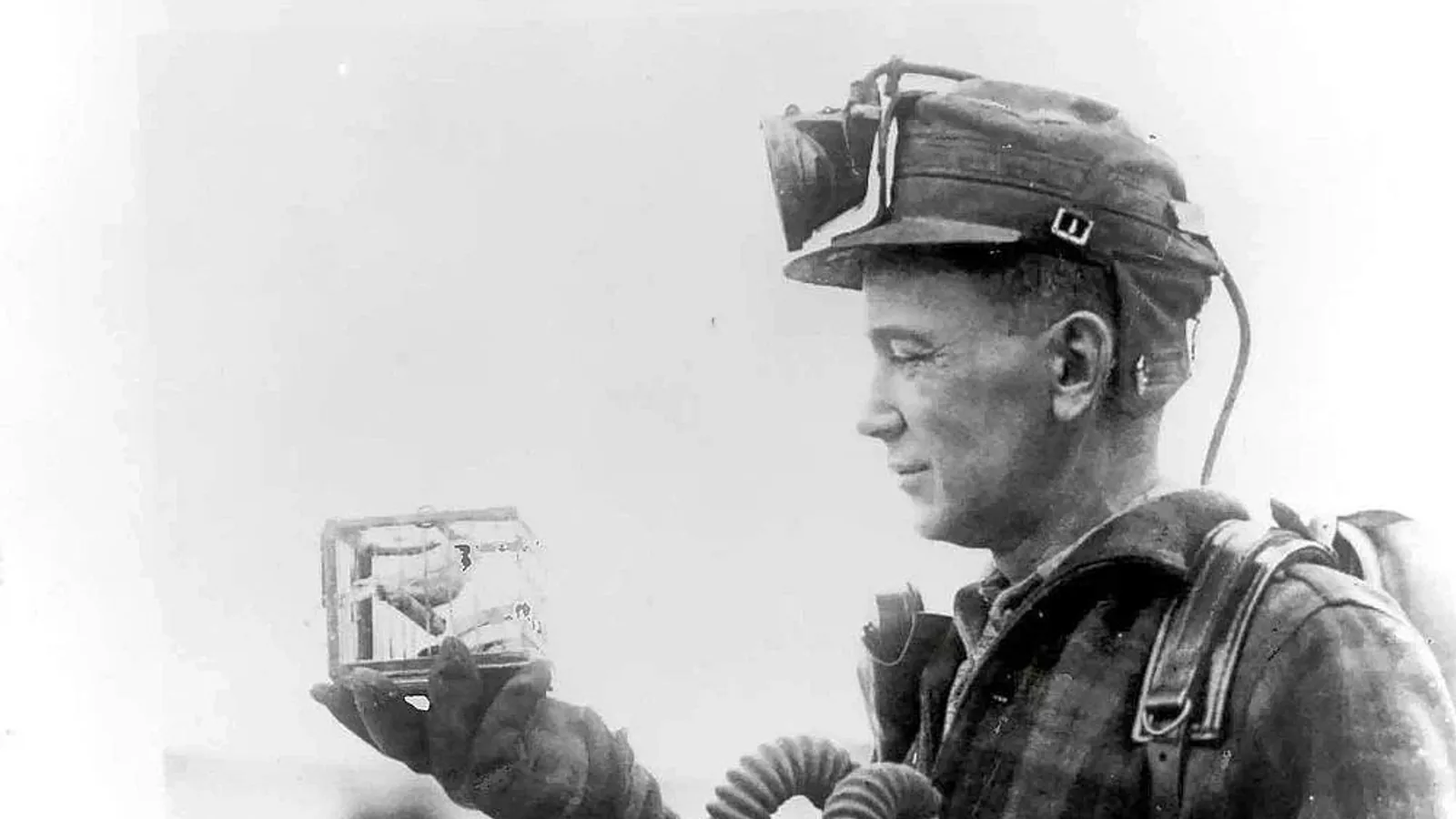
- commons.wikimedia.orgWikimedia Commons — mining foreman with a canary used to test for carbon monoxide, 1928, by George McCaa, U.S. Bureau of Mines (public domain)

Sources checked 22 November 2026. Send a correction.