
AINews
Google’s Genie 4 turns prompts into interactive worlds. Its biggest test is what stays consistent.
Google says its new research preview can generate changing scenes and sound in real time. Access is limited, and the company acknowledges that objects and details can drift.
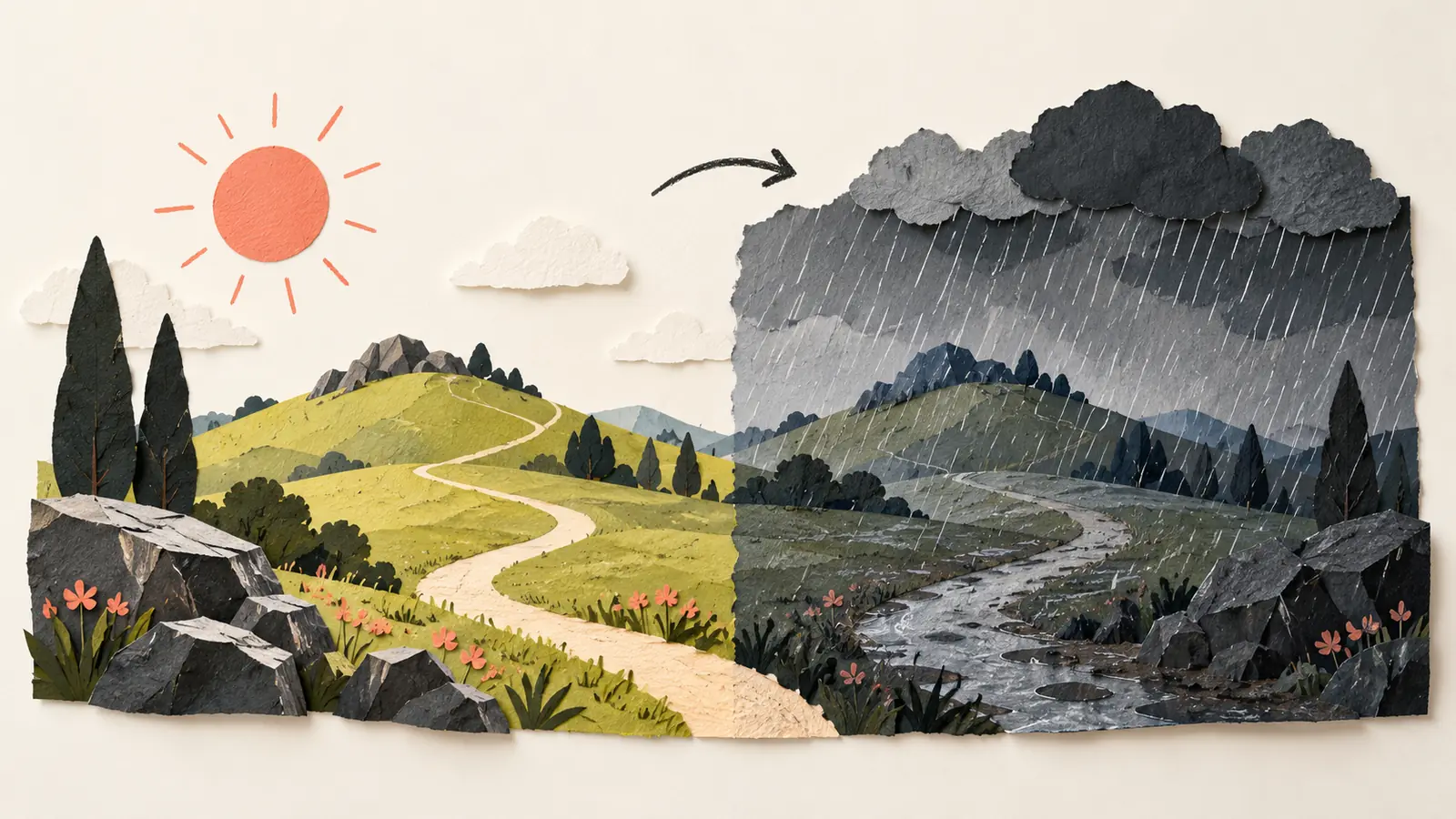
A world that changes as you explore it
Google DeepMind announced Genie 4 on 27 October as a research preview for a limited group of trusted testers. The company says its world model generates interactive scenes and accompanying audio, and can respond to text instructions while a scene is running. Wider access is planned for selected Google AI Ultra subscribers and developer partners, but Google has not supplied a general release date.
Think of a filmed landscape. You can watch it, but a normal video will not change the weather because you ask it to. A world model aims to produce the next moments of a scene in response to an action or instruction. Google’s examples include moving the camera and changing the weather; the company also shows generated sound and dialogue.
SIGNAL has not used the preview. The following account explains Google’s published demonstrations and descriptions, not an independent hands-on test.
Why the interaction matters
A prompt-to-video tool typically gives its user a clip to watch. An interactive system has a different job: it must respond to a sequence of choices and keep the scene understandable as those choices accumulate. A user who changes direction expects the view to reflect that movement; a user who returns to an object expects it to remain recognisable.
That difference matters for creative work. A designer might want to explore several ways a scene could look before committing to a more expensive production. A game developer might use an exploratory environment to discuss an idea with colleagues. Those are possible uses, not evidence that Genie 4 can already replace a professional game engine or produce a finished game.
A carefully selected demonstration can show an interesting interaction, but it cannot by itself establish how well the system performs across unexpected instructions, longer sessions or different users. The range of situations that work reliably remains an open question.
What Google says is new
Google describes Genie 4 as generating audio alongside the visual world, including ambient sounds and dialogue. It also says a user can steer a running scene with ordinary language. In another example, Google describes using a Gemini model to plan and check steps while Genie generates the surrounding simulation.
That does not mean every imagined action is guaranteed to work. A planning model may identify a sequence of steps, while the world model still has to represent the consequences in a scene that a person can follow. A failure in either part can make an apparently plausible result less useful.
Google’s own demonstrations are useful evidence of what it chose to show. They are not a benchmark of reliability in every setting, and SIGNAL has not independently measured responsiveness, costs or visual quality.
A convincing scene is not a reliable world
The company identifies several limits: visual details and objects may drift, especially during longer sessions, after complex edits or as a user moves around. Spatial accuracy, text rendering, complex physical interactions and audio accuracy remain research problems, Google says.
Imagine leaving a room, turning around and finding that a chair has changed position. The picture could still look realistic for an instant, yet the change would matter to anyone using the scene to plan an action. Consistency across time is a different requirement from an attractive first frame.
The same distinction applies to physics. A sequence that resembles a ball falling does not prove that an interactive world will behave correctly under every collision or constraint. Google’s claims about potential realism and use in research should be read alongside the limitations it lists, rather than as proof of scientific accuracy.
What this could mean for games and robots
Google points to experiments in creative prototyping and robotics research. For game creators, a rapidly changing scene may help explore an idea before it is built using conventional tools. But a prototype is not automatically a playable commercial game: players also need reliable rules, controls, accessibility, testing and a way to ship the result.
For robotics, a simulated environment can offer a place to explore situations before taking a machine into the physical world. A useful simulation still has to represent the conditions that matter for its intended task. An impressive illustration of a robot action is not proof that a physical robot will repeat it safely.
Google describes these as research and potential applications. It has not established in this announcement that Genie 4 is a replacement for validated industrial simulators or human safety checks.
Who can try it
Access is the practical constraint. Google says trusted testers have begun receiving the research preview. It plans later access through Project Genie for Google AI Ultra subscribers and through early-access partners using the Gemini API and Google AI Studio. The announcement does not give a specific date for those later stages.
A waitlist or a planned rollout should not be confused with immediate availability. Anyone considering a subscription or integration should check the current access terms and availability directly before making a decision. SIGNAL has not verified the price of access for a particular reader or region.
The earlier Genie 3 research introduced explorable generated worlds as well. Genie 4’s announcement adds the claims about native sound and steering scenes while they run; without a common independent test, the demonstrations alone do not establish a numerical improvement for every task.
The next evidence to look for
The most useful next step is broader access that allows outside researchers and creators to explore both successes and failures. Useful questions include how often a scene stays consistent, what happens when instructions conflict, how quickly it responds and which restrictions apply to use or distribution.
Google says generated audio and video will include its SynthID watermark. That is a disclosure about Google’s intended system; it is not a guarantee that every viewer can recognise synthetic media or that a watermark resolves every question about provenance.
For now, Genie 4 is best understood as a limited research preview of interactive generated worlds. Its potential is broad, but practical value depends on access, reliability and independent observation that go beyond the announcement.
Original sources
- deepmind.googleGoogle DeepMind — Genie 4 research preview, demonstrations and limitations
- blog.googleGoogle — announcement and planned access
- deepmind.googleGoogle DeepMind — Genie model information and limitations
- deepmind.googleGoogle DeepMind — Genie 3 research background
Sources checked 28 October 2026. Send a correction.