
HardwareNews
IBM and AMD bring GPUs closer to quantum chips to test error correction
A new Oak Ridge, IBM and AMD research platform pairs quantum processors with a supercomputer in New York. It will test whether conventional hardware can keep up with the work of protecting quantum information.
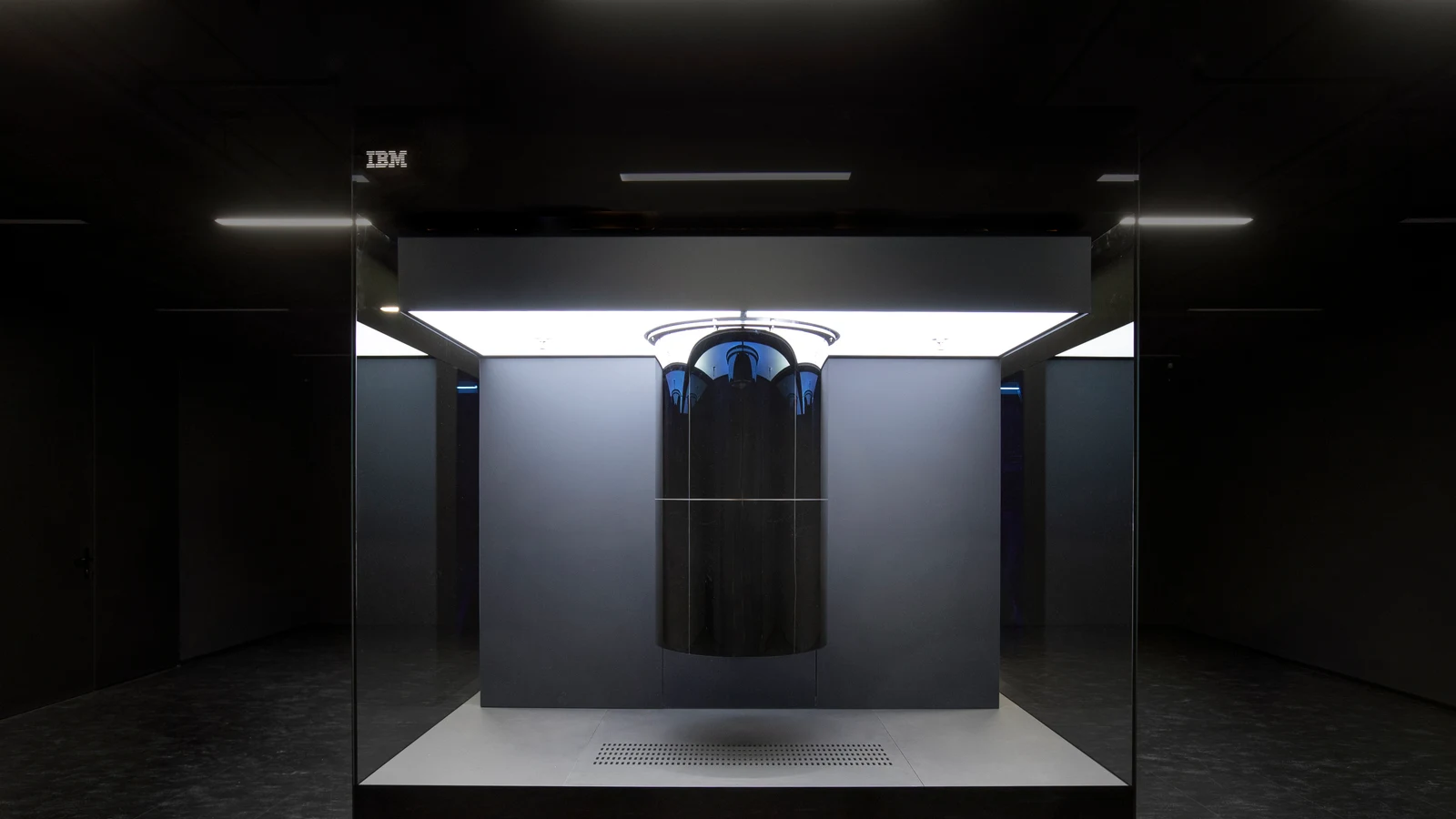
A quantum processor and a supercomputer in one lab
IBM, AMD and the Quantum Science Center at Oak Ridge National Laboratory announced a research platform on November 5 that puts quantum and conventional computing in the same facility. IBM says the system is deployed at its site in Poughkeepsie, New York. It pairs IBM Quantum Nighthawk r2 processors with Umbra, a high-performance computing system from Oak Ridge that uses AMD Instinct MI355X GPUs and fifth-generation EPYC CPUs.
The partners want researchers to test how well those machines can work together on quantum error correction. That is a concrete infrastructure change. IBM describes a facility for running experiments and comparing designs. Its announcement does not report that the platform has reached a new fault-tolerance milestone, and it does not give a price or an unrestricted public access date.
Why error correction needs a second computer
A physical qubit is a component that carries quantum information. It is also vulnerable to noise. A logical qubit encodes information across several physical qubits so that a computation can tolerate some faults. Error correction repeatedly measures checks that give clues about faults without directly reading out the information the computation is meant to preserve.
Those clues need interpreting. A conventional program called a decoder uses the pattern of check results to infer what went wrong and how the computation should account for it. A single check does not usually tell the whole story. The decoder may need to combine information across several checks and across several rounds.
This is why the conventional hardware is part of the experiment. If the decoder consumes check data more slowly than the quantum machine produces it, a backlog can build. And some operations depend on a result from earlier in the computation. For those operations, the delay before a usable answer comes back matters even if the decoder can process a great deal of data in aggregate. The two metrics to ask about are throughput and time to a decision.
What putting the machines together buys researchers
IBM says researchers often use separate systems and interfaces for the quantum and classical portions of an experiment. Putting the processors near each other gives teams a way to test shorter feedback loops and compare how much classical computing a particular correction scheme needs. Umbra can also be used to train and evaluate decoders. Training a decoder and feeding a result back during a live quantum calculation are distinct workloads. Success on one does not establish the performance of the other.
Think of a program that must choose one of two operations after a measurement. A decoder might be fast once its inputs reach a GPU, while the whole loop is still slow because results need to be collected, formatted and moved before the program can use the answer. A useful evaluation would time the whole loop and show whether it can sustain that performance across repeated rounds.
The November announcement describes the system as designed for low latency. It does not provide an end-to-end latency measurement for a specified error-correction workload. The value today is the ability to run that comparison on an integrated system.
How to read the 2028 target
The US Department of Energy's Q Competition gives the partnership a reference point. The department is targeting 100 logical qubits and 100,000 hard operations by late 2028. Those are competition goals. The 120-qubit figure that IBM gives for Nighthawk describes physical qubits, so it cannot be compared directly with the competition's logical-qubit count. Encoding a protected qubit also uses hardware and time for repeated checks.
The operation count matters because a system that can protect information briefly still needs to preserve it through a substantial calculation. Conversely, a demonstration of many operations on a small register answers a different question from doing so across a larger one. When two announcements use the word “logical,” check what was encoded, what faults were corrected and which operations the experiment actually ran before comparing the numbers.
What would count as progress
Look for an experiment that specifies the code, the number of physical and logical qubits, the number of correction rounds and the logical error rate. A comparison should show how that rate changes as researchers add protection, alongside what the extra protection costs in qubits and time. For an integrated platform, it should also say how much computing the decoder required and whether any part of the analysis happened after the experiment.
The practical result would be evidence that the complete system can carry out a particular calculation more reliably as it scales. A faster decoder or a larger chip could help, but either figure on its own leaves open whether the rest of the system can keep up. The collaboration now has a place to measure those trade-offs together. That is the advance researchers can evaluate from here.
Original sources
- ibm.comIBM Research — technical description, decoder and deployment
- newsroom.ibm.comIBM Newsroom — 5 November platform announcement and Nighthawk physical-qubit count
- energy.govUS Department of Energy — Q Competition objectives and timetable
- commons.wikimedia.orgIBM Research photograph — original and attribution
- creativecommons.orgPhotograph reuse licence — Creative Commons Attribution 2.0

Sources checked 6 November 2026. Send a correction.