
SecurityNews
One bad Base64 string can corrupt Java’s memory on modern servers. Patch before the exploits go public.
Java4Shell (CVE-2026-114938), fixed on 17 November, is a memory-corruption flaw in Java’s Base64 decoder. Researchers at Calif say it let them run code without logging in on Jira, Jenkins, Keycloak and other servers. It needs Java 17, 21, 25 or 27 on x86 chips with AVX-512 VBMI. Not every Java vendor had a fix by 18 November.
In short
- What happened. On 17 November, Oracle and OpenJDK fixed CVE-2026-114938, “Java4Shell”, a memory-corruption flaw in Java’s Base64 decoder found by the security firm Calif.
- Who is affected. Servers running Java 17, 21, 25 or 27 on x86 chips with AVX-512 VBMI: Intel Xeon from Ice Lake, AMD Zen 4 and newer. ARM servers are not.
- The catch. Not every Java vendor had a fix on 18 November, and Calif says it will publish its exploits for Jira, Jenkins and others later.
62 byteswritten past the end of a 50-byte buffer by one malformed 65-character string, per Calif
9.2 vs 8.1severity out of 10: Calif’s CVSS 4.0 score versus Oracle’s CVSS 3.1 score
3 hoursto find the bug and build a first exploit with AI, according to Calif
What was fixed on Tuesday
On Tuesday, 17 November, Oracle released fixed Java builds in its November security update, and the OpenJDK Vulnerability Group published an advisory listing CVE-2026-114938 among the flaws fixed. The same day, the security firm Calif published its technical write-up and gave the bug a name: Java4Shell.
Calif first announced the flaw on X before the fix, saying its details had leaked, according to Tenable.
The bug sits in the code Java uses to decode Base64, a common way of writing binary data as text. Oracle scores it 8.1 out of 10 on CVSS 3.1: no login needed, but a high attack complexity. Calif scores it 9.2 under the newer CVSS 4.0 scale.
How a padding sign breaks a memory-safe language
Java is sold on memory safety: it checks memory accesses so developers do not have to. But parts of Java itself are written in low-level code. To decode Base64 faster, OpenJDK uses a hand-written routine built on AVX-512 VBMI, an instruction set found on recent Intel and AMD processors. Java switches to it once the decoder runs often enough to be compiled for speed.
Calif says that routine mishandles a stray “=” at the end of the input. Send 64 letter A’s followed by “=”, and Java sets aside a 50-byte result buffer, then writes 64 bytes starting at byte 48. Sixty-two bytes land past the end. On older Java 17 builds, the trigger is 128 A’s and “=”.
Java rejects the string, but only after the write.
The spilled bytes are fixed values. Calif researcher Quang Luong describes arranging the server’s memory so that the spill enlarges a neighbouring array. From there he could read memory that may hold keys and tokens, a step Calif calls JavaBleed, and then run his own code.
Step 1Warm-upValid Base64 is decoded until Java switches to its fast AVX-512 routine.
Step 2Malformed tail64 A’s and “=”: Java reserves 50 bytes, then writes 64 bytes from byte 48.
Step 3The spill62 bytes overwrite neighbouring memory before Java rejects the input.
Step 4GroomingIf memory is arranged right, the spill enables leaks, then code execution.
Who is exposed: the chip decides
Two conditions must meet. The first is the Java version. The OpenJDK advisory lists the Java 17, 21, 25 and 27 lines as affected, and Calif says Java 17 is affected from 17.0.6 onward. Standard Java 8 and 11 are not listed for this flaw; Oracle does list its Java 8 Enterprise Performance Pack build. Because the code comes from OpenJDK, Calif says Amazon Corretto, Eclipse Temurin, the Microsoft Build of OpenJDK, Azul Zulu, BellSoft Liberica, SAP SapMachine and Red Hat’s builds carry it too.
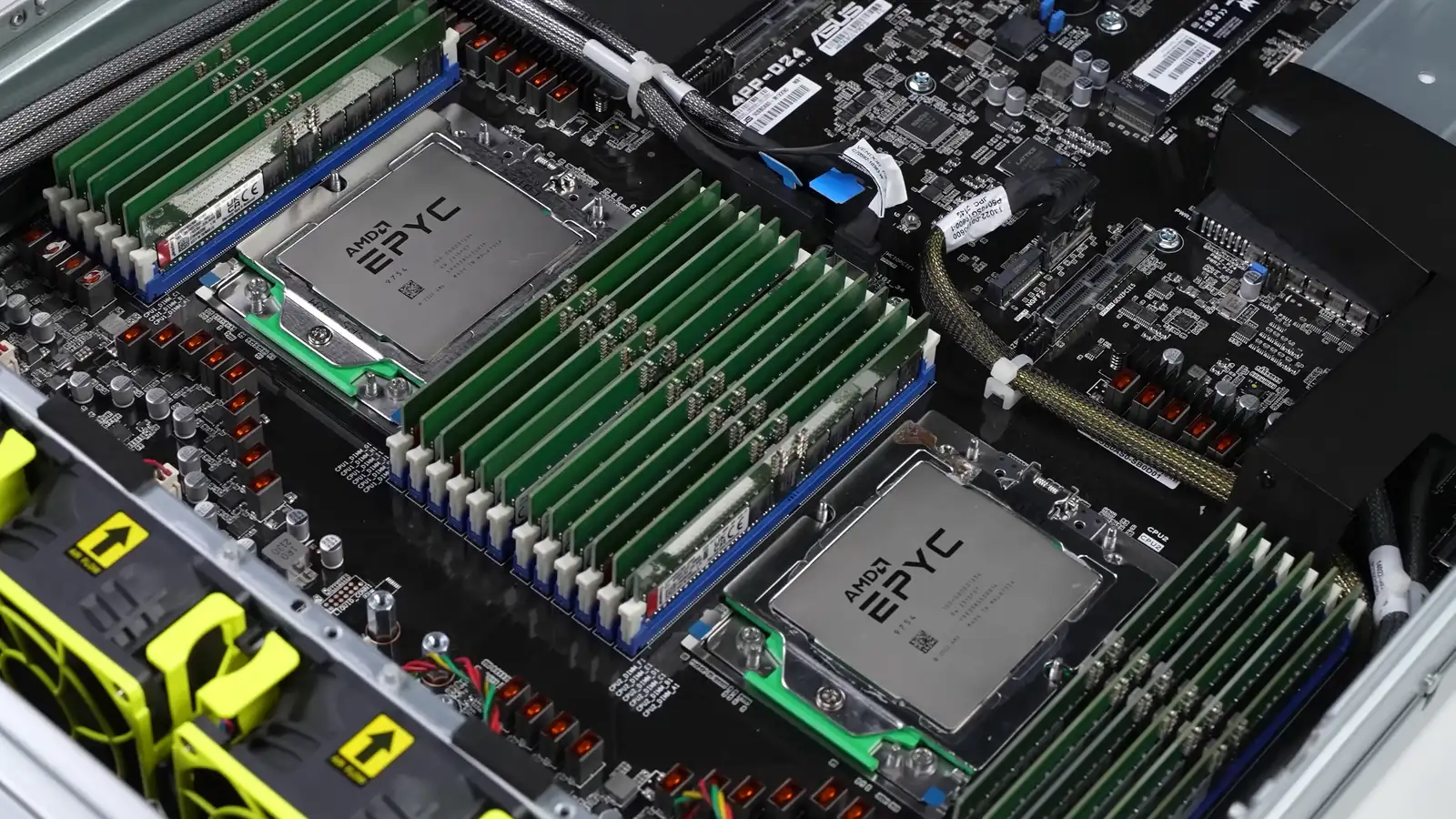
The second is the processor. The vulnerable routine only runs on x86-64 chips with AVX-512 VBMI. Calif names Intel Xeon chips from the Ice Lake, Sapphire Rapids, Emerald Rapids and Granite Rapids families, and AMD chips from Zen 4 onward. ARM64 servers are not affected.
That makes exposure uneven. As The Hacker News points out, the same container image can run the vulnerable code on one server and not on the next.
What Calif says it broke
Calif says it ran its own code without logging in on Keycloak, Atlassian Jira, Atlassian Confluence, JFrog Artifactory, Jenkins and PingFederate, in their default configurations. With a login, it did the same on Apache Kafka, Apache Solr, Elasticsearch, Gerrit and Spinnaker. It calls both lists incomplete.
Why no login? Servers often decode Base64 before they check who you are: HTTP login headers and security tokens are Base64. Calif adds that a Java program connecting over TLS to a malicious server can be compromised, with an exploit shared by the researcher samczsun.
These are Calif’s results. It is holding back its exploits for individual products and says it will publish them later, once users have had time to upgrade.
How real is the threat today
No attacks have been reported so far. Tenable said on 17 November it knew of no exploitation, and the flaw was not in CISA’s catalogue of exploited vulnerabilities when The Hacker News checked on 18 November.
Other labs have partly reproduced it. According to The Hacker News, Upwind corrupted memory and crashed Java on an AWS server with an Intel Ice Lake chip. Blackpoint Cyber crashed a test Spring Boot app with about 28,300 malformed login requests in roughly 20 seconds, without logging in, and read a stored secret in a local test. Neither reproduced remote code execution.
There is no universal exploit. Calif says each application needs its own memory layout and timing, and a failed attempt can crash Java, though an attacker can often try again.
The speed is the warning. Calif says it took Quang Luong, working with AI, an hour to find the bug and two more hours to build a first exploit, for less than $200 in tokens.
Where the fixes stand
Oracle’s fixed builds are 17.0.21.1, 21.0.13.1, 25.0.5.1 and 27.0.1.1, plus 8u513 for the Java 8 Performance Pack. The Hacker News reports that Amazon has fixed Corretto and Azul has fixed Zulu. When it checked on 18 November, Red Hat had not yet released fixes for Red Hat Enterprise Linux 8, 9 and 10 or its OpenJDK builds, and Eclipse Temurin, the Microsoft Build of OpenJDK and BellSoft Liberica had not listed fixed builds.
Products that ship their own Java runtime need an update from their maker. After updating, services must be restarted and container images rebuilt, or the old Java keeps running.
For servers that cannot be patched yet, Calif lists two Java start-up options that keep the vulnerable code from running: -XX:-UseBASE64Intrinsics, or -XX:UseAVX=2 on x86-64 only, since Java on ARM fails to start with it. Tenable notes that neither Oracle nor OpenJDK mentions them in its advisory.
What to watch next
Three dates matter. The first is when Calif publishes its product exploits, which turns a hard attack into a copyable one. The second is when the remaining Java vendors ship fixes: Red Hat’s matter for a large share of enterprise Linux servers. The third is any listing in CISA’s exploited-vulnerabilities catalogue, which would confirm attacks in the wild.
Also watch the software makers on Calif’s list. SIGNAL has not checked whether Atlassian, Jenkins, Keycloak or the others have issued their own advisories.
Original sources
- calif.ioCalif — Java4Shell: Write once, RCE everywhere, technical write-up by Quang Luong (17 November 2026)
- openjdk.orgOpenJDK Vulnerability Group — OpenJDK Vulnerability Advisory: 2026/11/17
- oracle.comOracle — Critical Security Patch Update Advisory, November 2026 (17 November 2026)
- tenable.comTenable — Java4Shell (CVE-2026-114938): frequently asked questions (17 November 2026)
- thehackernews.comThe Hacker News — Java4Shell flaw enables pre-auth RCE in Jira, Jenkins, Keycloak and more (18 November 2026)
- commons.wikimedia.orgWikimedia Commons — two AMD EPYC 9754 processors in a dual-socket server, still from a September 2023 video by Geekerwan (极客湾), CC BY 3.0, licence reviewed on Commons

Sources checked 18 November 2026. Send a correction.