
A model release, not a new laptop app
Meta released Muse Spark Open on 15 October. Its published model card describes an open-weight model with 816 billion total parameters, 42 billion active parameters and a one-million-token context window. Inputs include text, images, audio and video; output is text. Those are the publisher’s specifications, not results from a SIGNAL test.
NVIDIA’s accompanying launch post focuses on running the model on GB300 NVL72 infrastructure and on coding agents: software that can work through a task across multiple actions rather than returning one suggestion. The relevant development is access to a deployable model, alongside a serving ecosystem. It is not evidence that every reader can now replace a hosted assistant with a download.
The difference matters because access, usability and value are separate questions. A model can be available to obtain while remaining expensive or inconvenient for a particular person to operate. A release announcement answers the first question more readily than the other two.
Why 42 billion does not mean a 42-billion-parameter download
A parameter is one of the numerical values learned during training. Muse Spark Open uses a mixture-of-experts design. In this kind of network, a router selects a subset of expert networks for each token, a small unit of text processed by the model. The whole expert pool is not used in every calculation.
Think of a workshop containing many tools. Using only a few tools for one job reduces the work involved; it does not make the rest of the workshop disappear. The analogy explains selection, not the physical layout of this model.
NVIDIA’s explanation of mixture-of-experts systems makes the practical distinction explicit: fewer active parameters can reduce calculation, while the total model still creates memory requirements. Moving information between devices and coordinating that work also affect performance.
SIGNAL explanation: the active count is therefore an incomplete shopping guide for hardware. Before comparing it with a smaller model, ask what must remain in memory, what is moved elsewhere, and what compromises the proposed setup makes. An answer that quotes only the smaller number has left out the question that determines whether your machine can run it.
A large context window is capacity, not a guarantee
The advertised context window describes how much information a model can accept within its supported working space. It is not a guarantee that every relevant detail will be used correctly. A repository can fit into a system’s advertised capacity without every dependency or subtle requirement being understood.
SIGNAL analysis: imagine asking an agent to change a small function in a large project. The useful result is a correct change with appropriate tests and a clear explanation. Loading more files is helpful only when that extra information improves the result enough to justify the cost and delay.
A practical evaluation should therefore begin with a real task that has a known success condition. Compare a targeted set of files with the broader project, then examine the result. If the agent passes a test by weakening it, changes an unrelated file, or reports success without evidence, a long context window has not solved the underlying problem. Those are examples of what to check, not failures measured by SIGNAL in this model.
Read performance claims as experiments you would need to reproduce
NVIDIA presents optimized deployment options and performance figures for its own platform. Those figures belong to the hardware, software and measurement conditions described in its post. They should not be converted into a speed promise for an ordinary workstation. SIGNAL has not reproduced them.
For a reader evaluating an AI service, the useful questions are straightforward. How long until the first useful response? How long until the entire job is finished? Does the answer remain correct when other users are sharing the system? What did retries and rejected changes cost?
A fast stream of output is not the same result as a completed engineering task. A coding agent may generate text quickly while spending time on tools, waiting for tests or repairing its own work. Comparing only generation speed can miss the part of the workflow that the user actually feels.
SIGNAL analysis: ask for a complete, repeatable task and the resources used to finish it. Keep the prompt, relevant files, test outcome and settings. That record is more useful than a single large throughput number detached from its conditions.
Open weights change control, not every cost
The model’s distribution page uses a custom Muse Model License and includes access conditions. “Open weights” is the precise description here; it should not be expanded into a claim that every possible use is unrestricted. Read the actual terms for the intended deployment. This article is not a legal assessment of your project.
SIGNAL analysis: obtaining a model is only one part of operating a service. Someone must choose the serving software, provision capacity, maintain it, protect access and decide what the agent may do. A hosted service handles some of those jobs for its customer, while creating its own dependencies and contractual questions. Neither option automatically wins.
For an individual, a hosted route may be the practical way to evaluate a model before considering hardware. For an organization, local control may be valuable enough to justify operational work. The decision should follow a defined need, rather than the assumption that downloading weights makes the ongoing service free. No subscription, provider or piece of equipment is recommended by this article.
What would make the release useful to you?
Start with one recurring task and a reference result you trust. Decide what the model may read, which actions require review and how you will detect a wrong answer. Then compare the complete workflow with the approach you already use. This gives “better” a meaning that a demonstration alone cannot supply.
SIGNAL analysis: the next useful evidence is a reproducible deployment with disclosed settings, resource use and task outcomes. Independent evaluations can help separate an attractive launch from a dependable tool. For now, the verified news is the model release and its documented deployment options—not a SIGNAL finding that it replaces a paid assistant or belongs on a particular desktop.
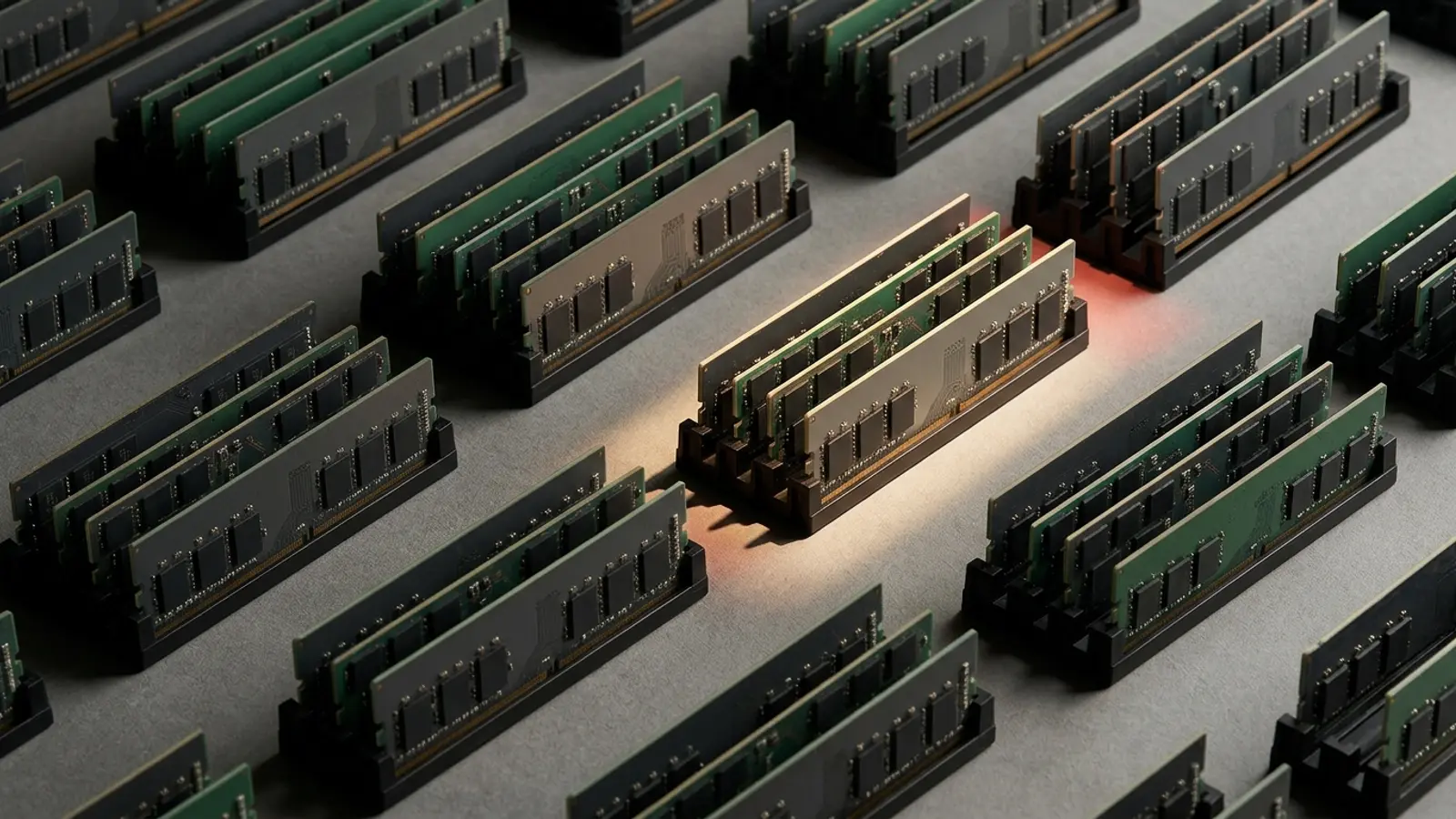
SIGNAL has not downloaded, run, benchmarked or audited Muse Spark Open. The accompanying visual is an AI-generated conceptual illustration of selective computation and memory requirements, not a photograph, a hardware recommendation or an exact architectural diagram.