
HardwareNews
Raspberry Pi raises its 16GB Pi 5 to $385. More memory needs a better reason.
A new price increase targets high-memory Raspberry Pi boards. The practical question is whether a project needs that capacity, rather than whether the biggest model is automatically the best choice.
A selective increase, not a new computer
Raspberry Pi announced on 2 November that its 16GB Raspberry Pi 5 would rise by $80 to $385, effective that day. The company also announced a $40 increase for 16GB Compute Module 5 variants. It attributes the changes to limited alternative supply of 16GB DRAM and other component shortages. That is the manufacturer’s explanation, not an independent audit of its costs.
The announcement says Raspberry Pi 500+ pricing is being held. It does not describe a blanket rise across every model. The stated dollar price is not a verified French checkout total: local tax, currency and reseller conditions must be checked separately.
There is also a documentation discrepancy. At our check, the Pi 5 product page still displayed $305 for the 16GB model, while the newer dated announcement specified $385. We report the announced change, not a claim that every retailer has already updated its price.
Memory capacity is only one part of the machine
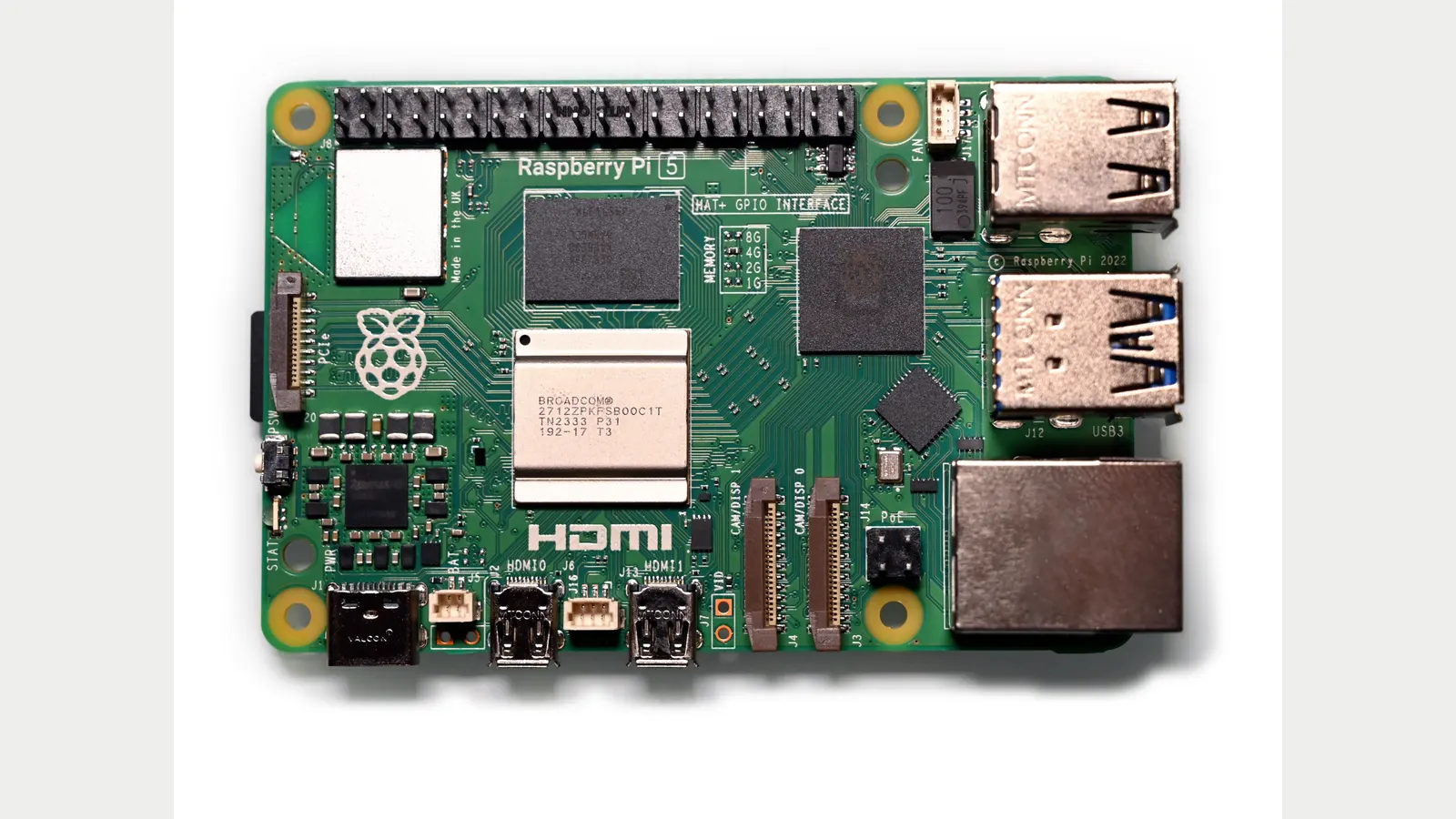
The Pi 5 specifications list a quad-core Arm Cortex-A76 processor, memory variants up to 16GB, USB ports, Ethernet and a 40-pin header. These connections help explain why someone might choose the board for a project instead of buying an ordinary desktop computer.
The same product page recommends a suitable 5V/5A USB-C power supply and says active cooling helps performance. It lists a microSD slot and a PCIe connection that needs an additional adapter for suitable peripherals. Those details matter when comparing a board’s price with a complete computer.
SIGNAL analysis: more RAM gives software room to keep more working data available. It does not, by itself, establish that the processor will finish a particular task faster. The useful question is whether memory capacity is the actual constraint in the intended workload. Buying the largest option without answering that question risks spending on a specification rather than a need.
Compare the project, not just the board
SIGNAL analysis: start with what the system must do. A small dedicated application and a desktop running several demanding programs are different purchasing problems. List the software, required connections, power supply, storage and enclosure before comparing alternatives.
If a project depends on the Pi’s connections or existing software setup, a cheaper conventional computer may require redesign work. Conversely, if the job is ordinary desktop computing, compare the full cost with a complete machine rather than assuming a single-board computer is always the economical route. These are decision criteria, not results from a comparative test.
For an existing project, measure its memory use under realistic load before replacing hardware. A machine that already meets the requirement does not become inadequate because another variant has more memory. Leave enough capacity for the actual workload, but distinguish a demonstrated need from a precaution that has no defined purpose.
What remains uncertain
SIGNAL has not hands-on tested these configurations or verified current reseller stock. We do not claim a particular alternative is faster, cheaper in every market or compatible with an existing project.
SIGNAL analysis: the immediate consequence is a more demanding purchase decision for high-capacity builds. The next useful evidence is consistent updated pricing and workload-specific measurements. Neither a supply explanation nor an impressive memory number substitutes for checking what the computer needs to accomplish.
Original sources
- raspberrypi.comRaspberry Pi — 2 November price announcement
- raspberrypi.comRaspberry Pi 5 — specifications; displayed price discrepancy noted
- commons.wikimedia.orgSimonWaldherr — original Raspberry Pi 5 photograph, January 2024
- creativecommons.orgPhoto licence — Creative Commons Attribution 4.0

Sources checked 3 November 2026. Send a correction.