
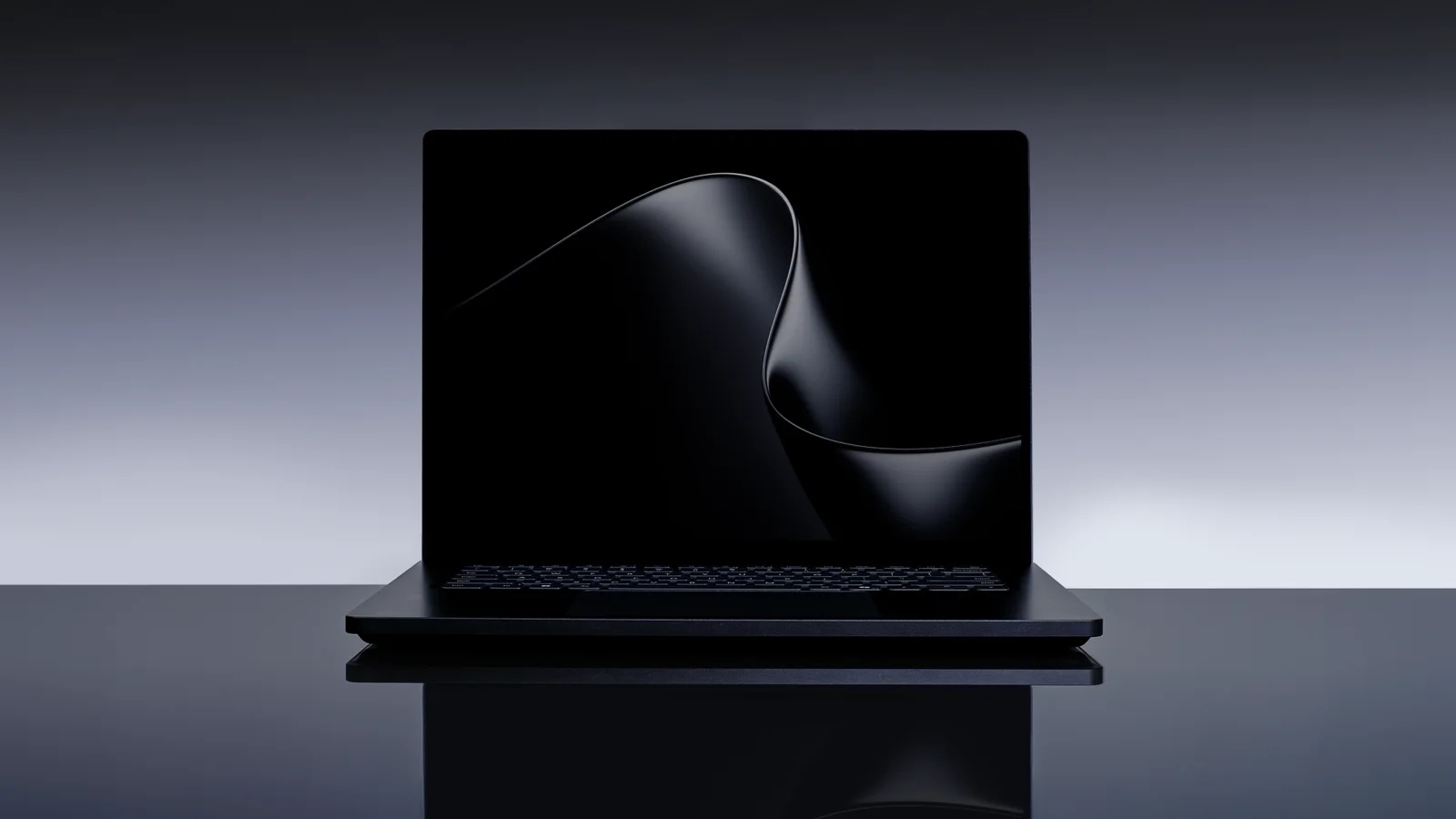
The launch is real. The experience still depends on the software.
NVIDIA announced on 16 October that RTX Spark laptops were available from its PC partners. The launch brings NVIDIA graphics and its AI software stack into a new class of portable Windows computers. This is a platform release, rather than a single laptop: individual manufacturers decide the screen, cooling, memory configuration and other details of their machines.
The hardware combines a Grace CPU with Blackwell RTX graphics. Those names describe two different jobs: the CPU handles general computer work, while the GPU accelerates suitable graphics and computing tasks. Microsoft's Windows announcement places the devices within its plans for local and cloud AI working together.
SIGNAL analysis: the consequential question is whether those parts form a useful everyday computer for your particular work. A powerful component cannot, by itself, guarantee that an application, its extensions and the devices attached to it all behave as expected.
Three meanings of “supported”
Compatibility is easiest to understand by separating three questions. Can an application launch? Can it use the hardware effectively? And can it complete your real workflow? These are evaluation questions, not results from a SIGNAL laptop test.
For example, imagine a video editor opening a project successfully but depending on a particular plug-in for delivery. The main application working would not settle whether the plug-in works, whether its effects export correctly or whether the finished file meets a client's requirements. The example is hypothetical; it is not a reported RTX Spark defect.
SIGNAL analysis: a platform-wide compatibility claim is a starting point for investigation. A useful check names the application version, required accessories and final task. The more specialized the workflow, the less informative a generic statement that the computer runs Windows becomes.
Native software, beta software and future software are different promises
The distinction is visible in NVIDIA's own launch material. It says Photoshop and Premiere offer native RTX Spark support through beta releases at launch, while Substance support is coming later. That wording matters: availability of a beta is not a statement that every production workflow has been validated.
Microsoft also described hybrid routing for GitHub Copilot tools as an experimental preview expected later in October. That feature concerns choosing between local and cloud models. It should not be counted as something every buyer necessarily receives when opening a laptop today.
SIGNAL analysis: before moving paid work onto a new platform, identify whether the exact feature you need is in a stable release, a beta or a roadmap. A promising preview can be useful for experimentation while still being a poor foundation for a deadline. Keep a working route for completing important projects until the replacement has proved itself.
A supported game list is more useful than an unlimited gaming promise
NVIDIA published a launch-day game list and discussed work with anti-cheat providers. It also identified titles arriving later: its article places Call of Duty support in 2027. The practical lesson is to check the game you actually play instead of interpreting a large catalog as universal coverage.
Online gaming can depend on more than drawing frames. A title may require a compatible launcher and protection software as well as the game itself. Those pieces belong in the same compatibility check. A visual demonstration does not independently establish that every online mode, update and accessory works.
SIGNAL analysis: for a potential buyer, three frequently played games are a better test list than an impressive count of titles. Check the publisher's current support information and the relevant version. If a must-have title is explicitly future support, treat it as future support rather than buying on the assumption that it is already solved.
Local AI is a capability, not an automatic privacy guarantee
The RTX Spark launch emphasizes running AI models and agents locally. Local execution means the relevant calculation can happen on the computer rather than necessarily being sent to a remote service. Microsoft's strategy nevertheless combines local and cloud processing; “hybrid” does not mean everything stays offline.
SIGNAL analysis: ask where each stage happens. A locally running model may still be part of an application that contacts remote tools or services. The important boundary is the complete workflow: what it reads, what it sends and what it can change. Location of model computation alone does not answer all three.
An agent also needs permissions. Letting software organize files or modify a project creates different consequences from asking it to draft a paragraph. Test on disposable material first, inspect the proposed actions and preserve a recovery route. These are general operating precautions, not a claim that SIGNAL has audited the products announced with RTX Spark.
Buy the configuration and the outcome, not the largest specification
NVIDIA advertises configurations with up to 128GB of unified memory. “Up to” is a ceiling across the offering, not a statement that every laptop includes that amount. Unified memory is shared by computing components; it is not a second, independent pool that can be counted again for each job.
HP's earlier US announcement illustrates why the individual machine matters: it gave separate starting prices for its OmniBook models and described availability as expected, subject to change. That is a regional announcement, not evidence of today's stock or a French price. SIGNAL has not checked out a device, obtained a review unit or verified retail inventory.
SIGNAL analysis: compare the configuration you can actually order with a task you need to finish. Include the cost of the software and any required service. Do not turn a maximum memory figure or a vendor performance claim into a universal claim about battery life, speed or value.
What would make this a meaningful upgrade?
Start with a short list of non-negotiable tasks. For work, that might be opening an existing project, using its required extensions and exporting the result. For development, it might be installing a particular dependency set and running the tests. For gaming, it might be a specific online title and controller. These are examples of a useful evaluation, not measurements performed for this article.
Then separate what is available now from what is promised. Repeatable independent testing of complete laptops will be more useful than a demonstration of one component. Sustained operation, unplugged behavior and application-specific reliability need evidence from the relevant device and configuration.
SIGNAL's view: RTX Spark is worth watching because it broadens what a portable Windows PC can attempt locally. Its value will be determined by the software people can use reliably, not the breadth of the launch language. This is an explanation of the release and its practical questions, not a tested review, buying recommendation or finding that it replaces a different computer.
Original sources
- investor.nvidia.comNVIDIA — RTX Spark laptop availability announcement, 16 October 2026
- blogs.windows.comMicrosoft — Windows hybrid intelligence, preview timing and device plans
- nvidia.comNVIDIA — Launch-day games and future title support
- hp.comHP — Device-specific US pricing and expected availability, 7 October 2026
Sources checked 18 October 2026. Send a correction.