
Less waiting before the game starts
Microsoft said on 21 October that Advanced Shader Delivery is now broadly available on supported Windows devices using AMD, Intel, NVIDIA and Qualcomm hardware. The feature delivers precompiled shaders with a game download, reducing preparation work that would otherwise happen on the player’s machine.
A shader is a small program used in the graphics pipeline. Compiling it means translating it into instructions suitable for the hardware. Moving that work ahead of a first launch can make the familiar preparation screen less of an obstacle.
The announcement also names Steam and the Epic Games Store as future destinations. It does not say those storefronts already support the feature. Microsoft says a coming Fortnite update will add support, without giving a date in the post.
Why it is more than a driver switch
Microsoft’s integration documentation makes clear that game developers have work to do. They capture information about the game’s graphics pipelines into a database, test the resulting compiled data, and deploy that material to a storefront. The storefront can then prepare and deliver the shader database alongside the game.
That is why installing a compatible driver should not be interpreted as upgrading an entire game library. The title needs to participate in this delivery process. The documentation separately lists Windows 11 version 24H2 or newer and an ASD-capable GPU and driver as prerequisites.
In everyday terms, this is closer to receiving something already prepared for your machine than buying a machine that can do the work faster. The distribution system and the game’s integration are part of the improvement.
A concrete example, with conditions
NVIDIA’s latest Game Ready Driver announcement describes Advanced Shader Delivery for Call of Duty: Modern Warfare 4 and Gears of War: E-Day. It explains that the compiled data is delivered through the Xbox PC app for supported titles purchased from the Microsoft Store.
The same driver announcement also discusses DLSS updates. Those are different features: a shader-delivery improvement should not be confused with AI upscaling, frame generation or a general increase in rendering performance. They can appear in the same release without measuring the same thing.
This distinction is useful when deciding what an update actually changes. A shorter preparation stage answers a different question from how smoothly a game responds once it is running.
What players should check
Microsoft’s earlier 1 October update described the cross-vendor rollout as an expansion of existing work, with Gears of War: E-Day as a showcase. That history matters: the new announcement broadens availability rather than introducing the basic idea for the first time.
Before expecting a benefit, check the supported title and storefront, the Windows requirement, and the relevant vendor’s driver requirements. Support for a manufacturer does not mean every product carrying its name is included. Microsoft’s current post lists specific Intel and Qualcomm families, while the AMD and NVIDIA entries have their own architecture and driver conditions.
SIGNAL has not measured loading times or frame delivery for this rollout. The claimed improvements come from Microsoft and NVIDIA; no independent benchmark is presented here. Avoid treating a best-case example as a result every PC will reproduce.
The useful next evidence is straightforward: which games actually deliver the prepared data, whether the feature is active on a particular setup, and how that setup behaves before and after. Until the announced storefront expansion arrives, it also matters where the game was obtained—not just which graphics card is inside the PC.
Original sources
- devblogs.microsoft.comMicrosoft DirectX — Expanded hardware availability and future storefront plans, 21 October 2026
- github.comMicrosoft — Advanced Shader Delivery integration documentation
- nvidia.comNVIDIA — Game Ready Driver and shader-delivery explanation, 20 October 2026
- devblogs.microsoft.comMicrosoft DirectX — Earlier rollout context, 1 October 2026
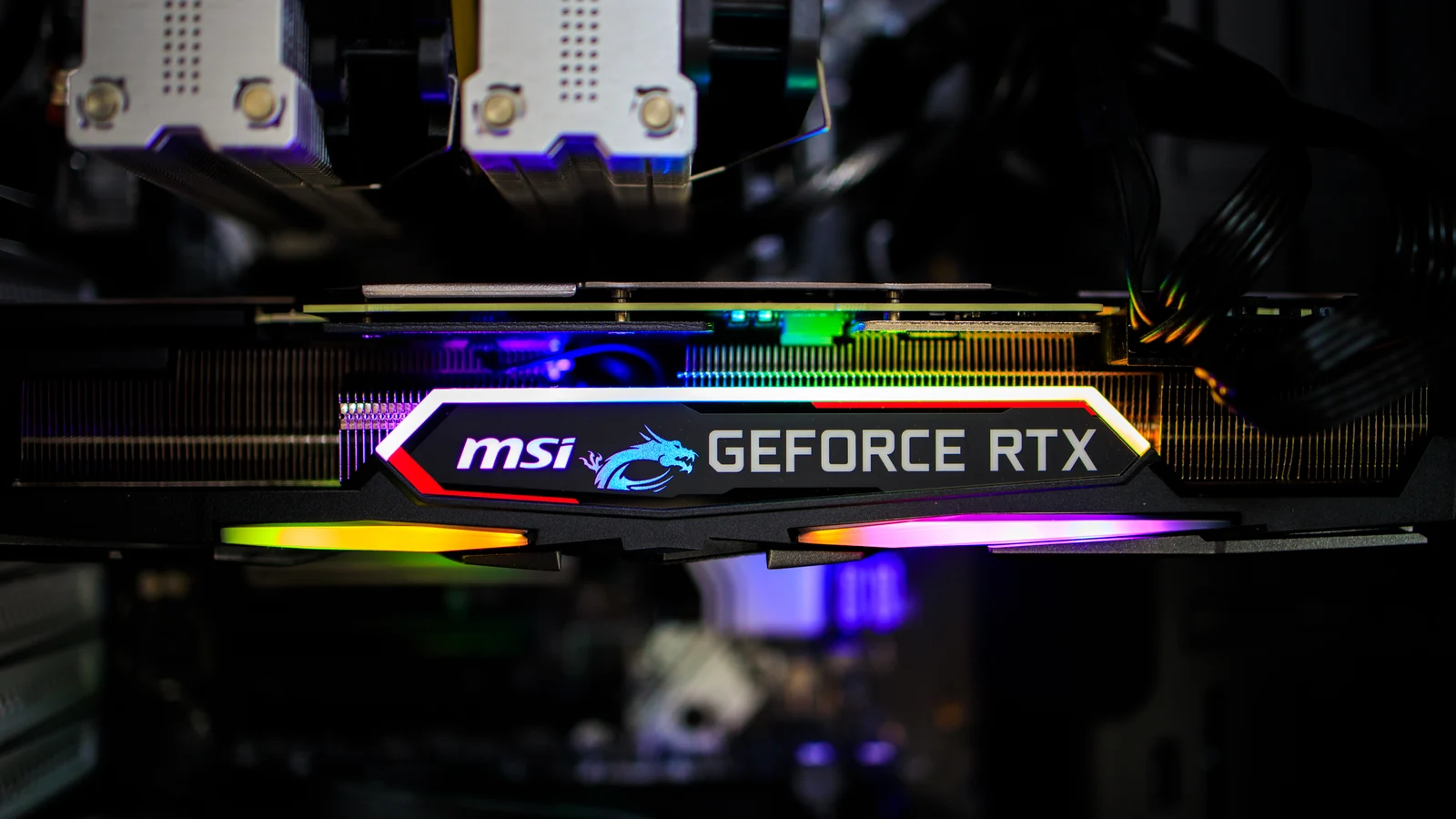
- commons.wikimedia.orgPhotography — nubobo, GEFORCE RTX (2019), original source and attribution
- creativecommons.orgImage licence — Creative Commons Attribution 2.0

Sources checked 22 October 2026. Send a correction.